Gleitschleifen von Aluminiumteilen: Entgraten, Glätten und Polieren ohne Verschmieren
Oberflächenveredelung von Aluminium • Auswahl von Medien, Mischungen und Zyklus • Von CNC-Teilen bis hin zu kosmetischen Komponenten
Aluminium ist eines der lohnendsten – und gleichzeitig anspruchsvollsten – Metalle für die Massenbearbeitung. Es lässt sich schnell entgraten, hervorragend glätten und zu einem attraktiven, seidenmatten Glanz polieren. Allerdings neigt es unter aggressiven Schleifmitteln zum Verschmieren, verfärbt sich, wenn Polierpaste darauf antrocknet, und verliert schneller als Stahl scharfe Kanten. Der Unterschied zwischen einem ausstellungsreifen Aluminiumteil und einem Ausschussteil liegt fast immer in der Wahl des Schleifmittels und der konsequenten Anwendung des Verfahrens.
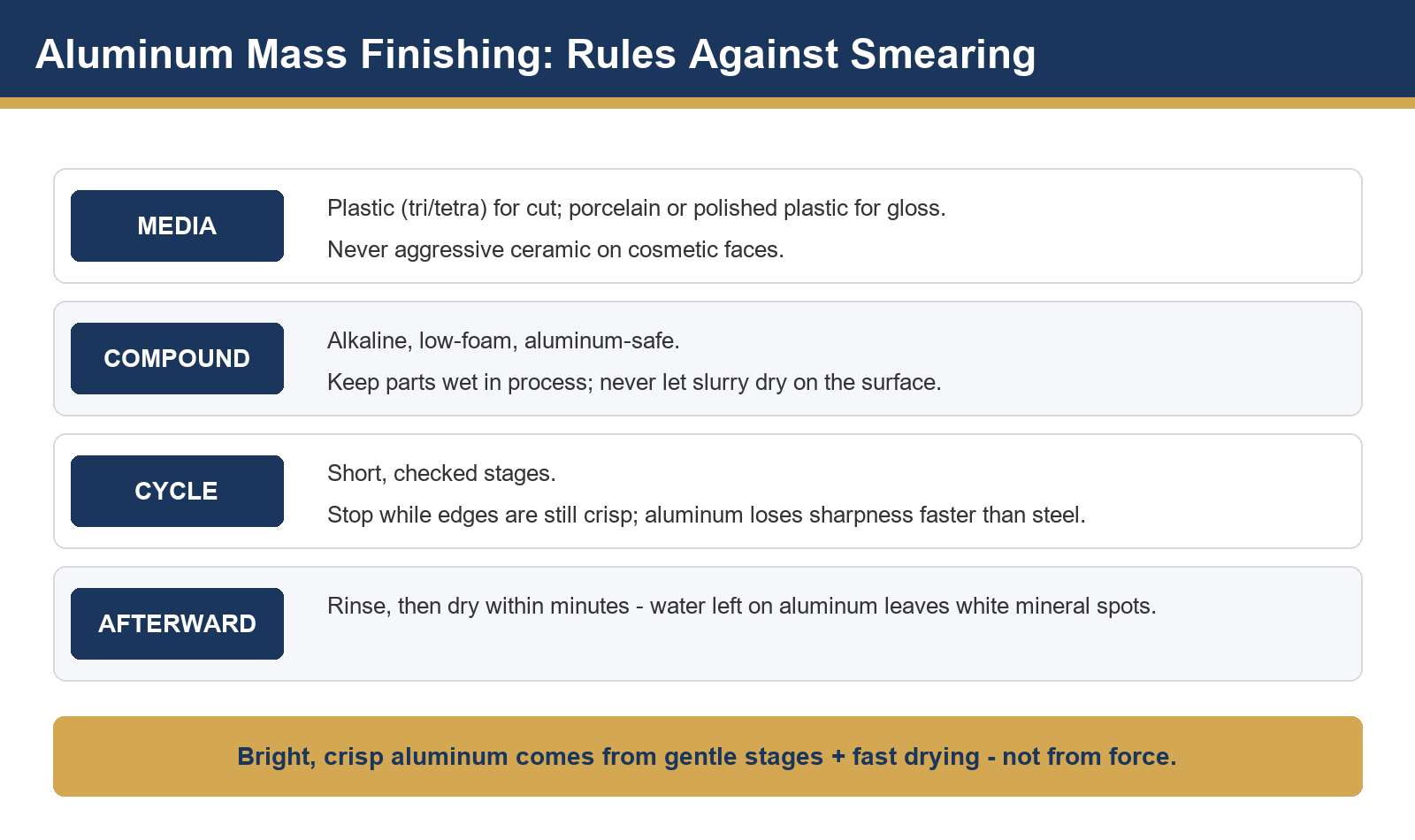
Das Kernproblem.Aluminium ist weich und zähflüssig. Aggressive Schneidmedien schneiden es nicht sauber – sie verschmieren und verstopfen die Schneidflächen, wodurch graue, glänzende Streifen entstehen. Alle Schritte in diesem Leitfaden basieren darauf, diese Schmierung zu vermeiden.
1. Kenne deine Ausgangslage
- CNC-gefräste Teile:Scharfe Grate an den Werkzeugaustrittsstellen, Bearbeitungsspuren an den Flächen. Vor dem Polieren ist ein gründlicher Schnitt erforderlich.
- Druckgussteile:Trennfugen, Kaltverbindungen und Porosität. Leichter Schnitt plus starkes Glätten; beachten Sie, dass sich mit abnehmender Materialstärke Poren unter der Oberfläche öffnen können.
- Strangpressprofile und Stanzteile:hauptsächlich Glättungs- und Kantenverrundungsarbeiten.
- Teile, die anodisiert werden sollen:Die Voranodisierung muss gleichmäßig sein – jeder noch so kleine Wirbel muss durch die Beschichtung hindurchscheinen.
2. Medienwahl: Kunststoff zuerst, Keramik mit Vorsicht
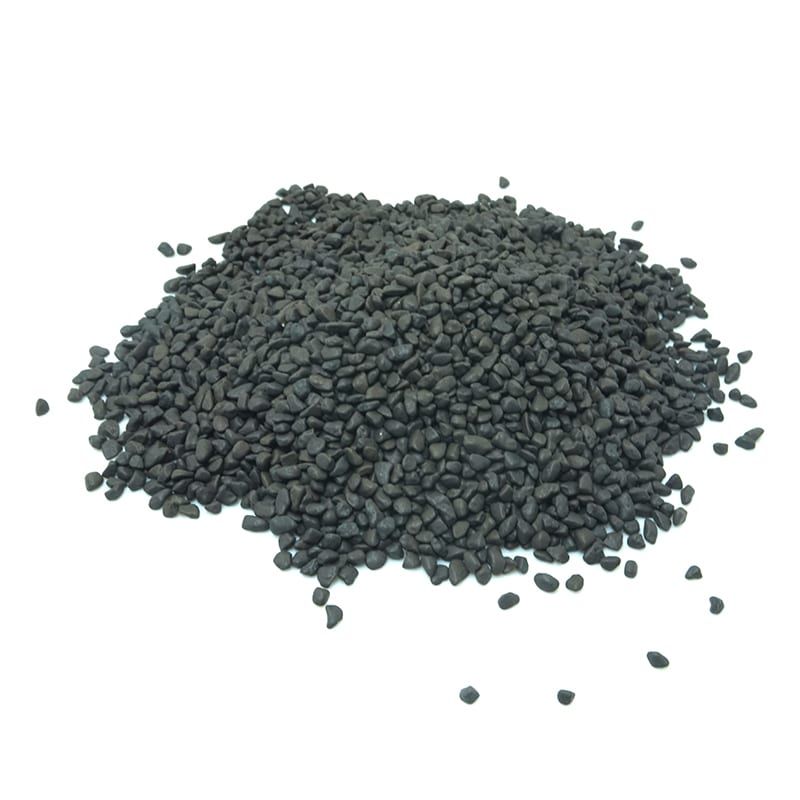
Für Aluminium sind gebundene Kunststoffschleifmittel die Standardlösung: Ihr Schleifmittel wirkt ohne Riefenbildung, und die Polsterung schützt die Kanten. Präzisionskeramik (insbesondere feines Porzellan) eignet sich hervorragend für die Glättungs- und Glanzphasen, wenn sie mit der passenden Polierpaste kombiniert wird. Eine vollständige Vergleichslogik finden Sie in unseremLeitfaden zu Keramik- vs. KunststoffmedienBeide Familien sind in unserem Sortiment vertreten.KunststoffmedienUndKeramikmedienKataloge.
| Bühne | Medien | Objektiv |
| Entgraten / Schneiden | Verbundene Kunststoffdreiecke oder -tetraeder (mittelgroß) | Grate und Bearbeitungsspuren entfernen, ohne zu verschmieren |
| Glatt | Feiner Kunststoff oder leichte Keramik | Gleichmäßige Satinstruktur auf allen Oberflächen |
| Vorglanz | Porzellan / polierte Keramik mit Glanzpaste | Glänzende, reflektierende Oberfläche, bereit zum Eloxieren oder Verkaufen |
3. Verbunddisziplin
- Aluminiumverträgliche Chemie:Stark alkalische Verbindungen greifen Aluminiumoberflächen an; wählen Sie Formulierungen, die als sicher für Aluminium und Nichteisenlegierungen gekennzeichnet sind.
- Den Fluss aufrechterhalten:Eine kontinuierliche oder dosierte Dosierung verhindert das Trockenreiben der Teile – denn bei trockenem Kontakt beginnt das Fressen.
- Sofort abspülen:Verbrauchte Aluminiumschlämme trocknet zu harten, weißen Ablagerungen, die später nur schwer zu entfernen sind.
4. Zykluskontrolle und Kantenschutz
Führen Sie kurze Fertigungsschritte durch und messen Sie die Ergebnisse. Aluminiumkanten verschleißen sichtbar schneller als Stahlkanten. Prüfen Sie daher an jedem Phasenübergang – insbesondere Gewinde, O-Ring-Nuten und Passflächen – die Prüfteile anhand eines Kontrollteils. Wenn Ihre Charge dicke und dünne Bereiche enthält, sollten Sie diese trennen; dünne Bereiche sind deutlich schneller fertig als dicke.
5. Ein praktisches Beispiel: Motorrad-Legierungshalterungen

Das Ziel ist hier deutlich zu erkennen: Guss- und Bearbeitungsrauheit beseitigt, die erzeugten Oberflächenstrukturen jedoch weiterhin scharf. Dieses Gleichgewicht wird durch schonendes, stufenweises Bearbeiten anstelle eines einzigen, aggressiven Bearbeitungsvorgangs erreicht.
6. Häufige Mängel und deren Behebung
| Defekt | Ursache | Fix |
| Graue, verschmierte Streifen | Medien zu aggressiv; Substanz verhungert | Umstellung auf Kunststoffmedien; Dosierung erhöhen |
| Weiße, pudrige Flecken | Auf der Oberfläche getrocknete Suspension | Spülen Sie die Teile sofort nach dem Waschen ab; lassen Sie sie niemals über Nacht nass. |
| Kanten abgerundet | Zyklus zu lang oder gemischte Losgrößen | Arbeitsgänge verkürzen; Teile nach Wandstärke sortieren |
| Medien in Löchern verklemmt | Übergroßes Medienformat | Kleinere, schräg geschnittene Medien oder gemischte Größen gemäß unserer Anleitung für kleine Löcher |
7. Schnelltrocknend, sauberes Finish
Die Nassveredelung endet mit einem Trocknungsschritt, der bei Aluminium wichtiger ist als bei den meisten anderen Metallen: Wasser, das auf frischen Oberflächen steht, führt innerhalb weniger Minuten zu Mineralflecken. Ein Schleudertrockner oder eine Trocknung mit saugfähigem Mais direkt nach dem Spülen sorgt für eine saubere Oberfläche. Passen Sie Ihre Trocknungsmethode mithilfe unserer [Name der Tools/des Tools] an Ihren Durchsatz an.Finish-TrocknerSchickt uns bitte die kniffligen Stellen, wenn ein Rezept noch nicht vollständig erprobt ist.
Aluminiumteile, die mit Schmierflecken oder Verschmutzungen zu kämpfen haben?
Senden Sie uns Proben mit Fotos des Defekts. Unser Team ermittelt die Ursache und sendet Ihnen eine getestete Mischung aus Nährmedium und Wirkstoff zurück.
Kontaktieren Sie unser Finishing-TeamOffizielle Website:www.surface-polish.com | Support-E-Mail:info@surface-polish.com
 +86-592-2381506


 IPv6-Netzwerk unterstützt