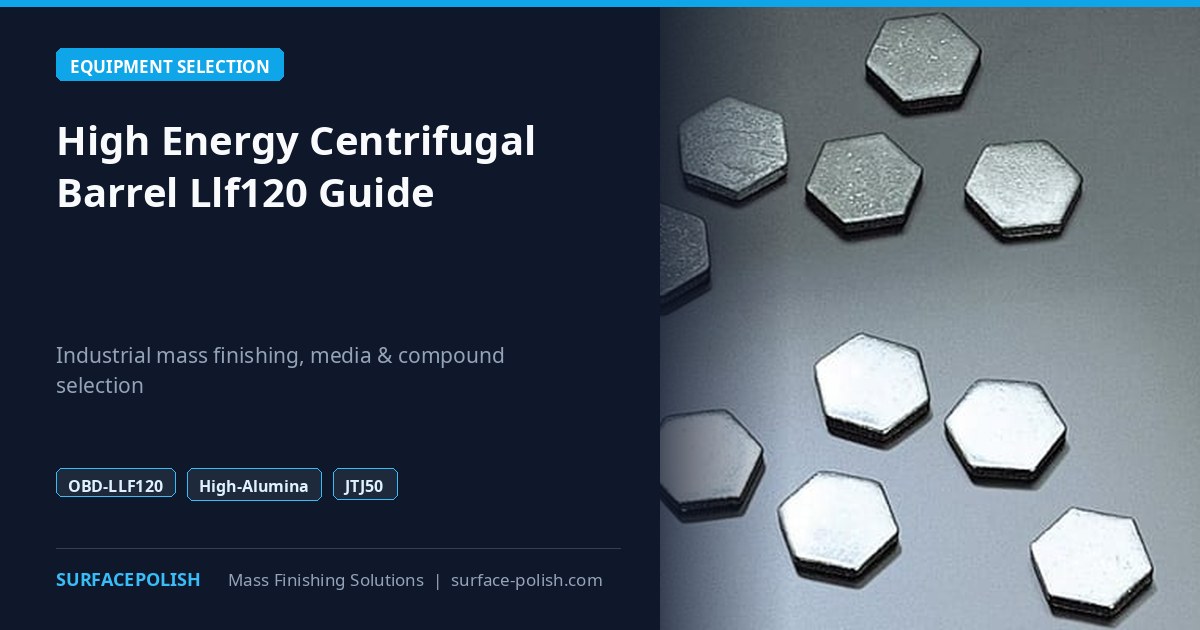
When precision valve sleeves, turbine blades, orthopedic bone screws, and hardened tooling components demand rapid isotropic finishing without the sliding-zone micro-nicks or flat-spot bruising of open vibratory bowls, a high energy centrifugal barrel LLF120 planetary system delivers unmatched surface uniformity. Using four counter-rotating barrels mounted on a high-speed rotating turret, the OBD-LLF120 generates smooth, high-G compressive sliding force inside sealed hexagonal or cylindrical chambers—eliminating free-fall part impacts completely. SurfacePolish (Xiamen Jin Tai Jin Grinding Technology Co.,Ltd.) draws on 200,000+ verified finishing trials to configure OBD-LLF120 planetary systems alongside centrifugal and rotary finishing machines using high-alumina spheres and JTJ50/JTJ60 chemistry for flawless precision production.

How Planetary Counter-Rotation Eliminates Part-on-Part Micro-Nicks
Unlike open vibratory bowls or stationary-wall centrifugal discs where parts bounce across free air pockets or scrape past stationary transition gaps, a high energy centrifugal barrel LLF120 keeps the entire media-and-part charge compressed smoothly inside sealed planetary drums.
Turret Rotation vs. Counter-Rotating Barrel Kinematics
Four polyurethane-lined barrels are mounted symmetrically around a central main turret. As the main turret spins rapidly in one direction, each individual barrel counter-rotates smoothly on its own axis. Centrifugal acceleration locks parts and abrasive stones tightly into a dense, fluid-free-fall sliding layer along the outer wall—producing continuous high-pressure micro-cutting with zero violent tumbling drops.
Why Precision Valve Sleeves, Turbine Blades & Bone Screws Need Zero-Impact Shear
Aerospace compressor blades, hydraulic valve spools, and precision bone screws carry razor-tight concentricity tolerances and delicate thread crests that easily bruise inside standard cascading drums. Planetary G-force inside an OBD-LLF120 centrifugal finishing machine suspends every workpiece firmly inside the rolling media blanket, keeping heavy parts from striking one another while compressing finishing cycles dramatically.
Achieving True Multi-Stage Isotropic Smoothness in One Platform
Because operators can load different media grades across consecutive runs—stepping from fine ceramic media leveling straight into high-alumina burnishing and JTJ50/JTJ60 brightening—the OBD-LLF120 produces non-directional mirror-satin clarity across complex curved airfoils and root fillets alike.
| Precision Component Family | Primary Surface & Edge Requirement | Recommended OBD-LLF120 Setup |
Media & Compound Pairing | Key Planetary Advantage |
|---|---|---|---|---|
| Surgical bone screws & gamma nails | Burr-free threads & mirror biocompatibility | OBD-LLF120 planetary + 35A dry |
High-alumina spheres + JTJ50 / JTJ60 |
Zero thread-crest peening or nicks |
| Aerospace & turbo blades | Isotropic airfoil smoothness & edge radius | OBD-LLF120 multi-stage run |
Fine ceramic media then high-alumina |
Uniform root-to-tip finish, no distortion |
| Hydraulic valve sleeves & spools | Crisp metering edges & low surface drag | OBD-LLF120 + OBD-60 internal bore |
High-alumina cylinders + JTJ60 / HM3 |
Preserves sharp metering lands cleanly |
| Carbide inserts & precision punches | Micro-edge honing without chipping | OBD-LLF120 controlled turret RPM |
Fine ceramic media / plastic media + HM3 |
Controlled uniform edge prep |
| Watch cases & luxury brass bezels | Deep optical pre-plate mirror clarity | OBD-LLF120 wet then walnut shell |
Plastic media then high-alumina + JTJ60 |
Fast scratch-free mirror readiness |
Contrasting OBD-LLF120 Planetary Barrels with LLB50 Discs & ZL Bowls
Choosing between a high energy centrifugal barrel LLF120, an OBD-LX100B/LLB50 centrifugal disc, and a curved-wall ZL vibratory finishing machine depends directly on batch size, surface delicacy, and acceptable capital cycle trade-offs.
Where OBD-LLF120 Beats ZL Vibratory Bowls & LLB50 Discs
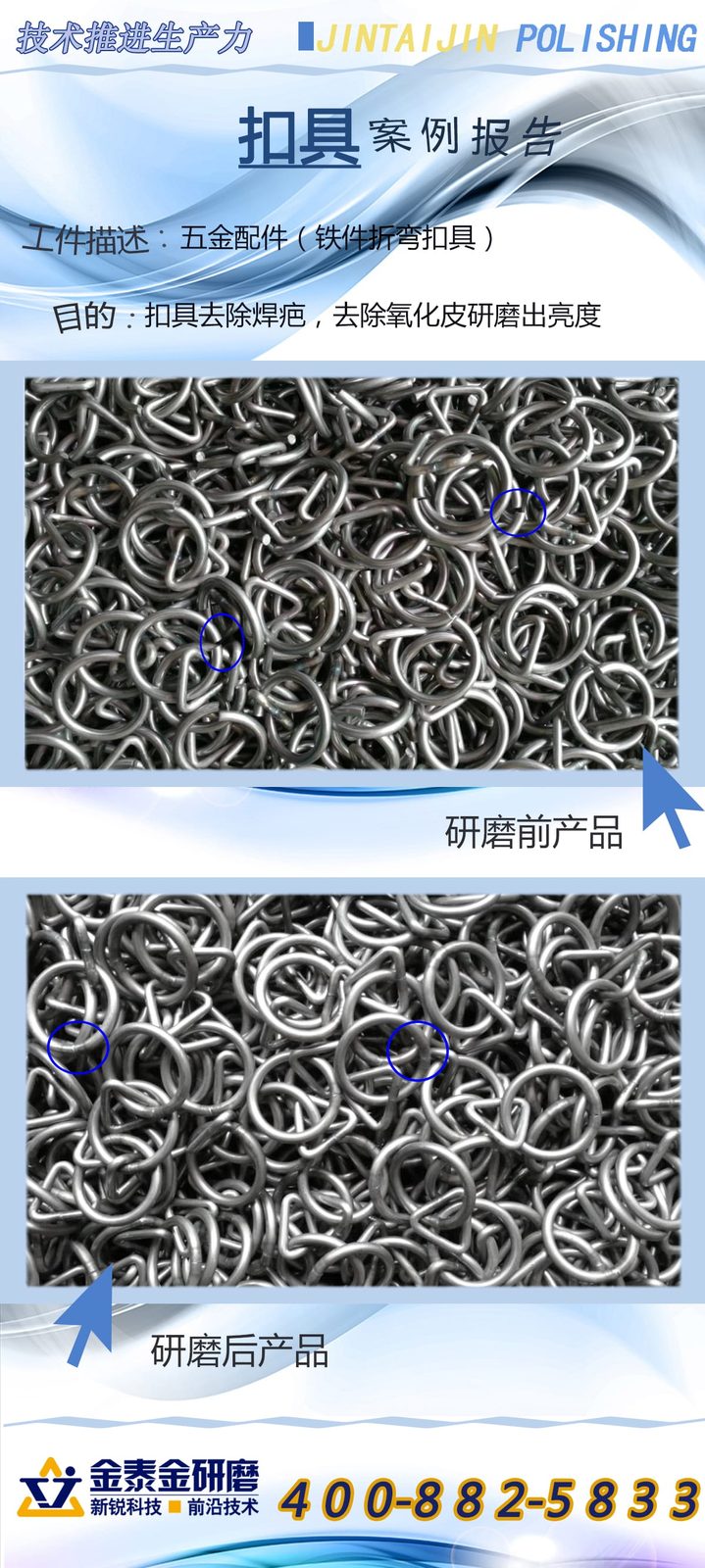
Open vibratory bowls excel at high-volume continuous deburring of medium brackets, while LLB50 discs shine on small stamped clips needing rapid open-top loading. However, when hard titanium, Inconel, hardened tool steel, or delicate precision threads require intense compressive smoothing with zero part-on-part collision, the sealed four-barrel OBD-LLF120 outperforms both platforms on surface finish uniformity and cycle compression.
Running Four Independent Alloys or Media Recipes Simultaneously
Because the OBD-LLF120 carries four separate balanced drums, high-mix precision shops can process four distinct small batches—or four isolated alloy families—at the same time under identical G-force profiles, provided opposing barrels are balanced evenly in total load weight.
Pairing OBD-LLF120 with OBD Magnetic Polishers for Internal Bores
While planetary barrels polish exterior blade profiles and thread flanks brilliantly, deep blind cross-holes inside hydraulic manifolds or medical cannulas still benefit from a rapid secondary pass in an OBD-60 or OBD-100 magnetic polishing machine using fine 304 stainless pins.
Media Selection: High-Alumina, Fine Ceramic Media & Plastic Media
High centrifugal G-forces multiply abrasive contact pressure dramatically, meaning soft or poorly graded stones break down rapidly unless matched properly to alloy hardness.

High-Alumina Spheres & Cylinders for Isotropic Burnishing
Dense high-alumina balls, pins, and micro-cylinders are the workhorse media inside a high energy centrifugal barrel LLF120. Their extreme wear resistance prevents premature stone crumbling under high planetary G-loads, delivering crisp micro-burnishing that compresses surface peaks into an ultra-smooth, low-friction sheen ready for plating or passivation.
Fine Ceramic Media for Heavy Pre-Cut vs. Plastic Media for Soft Alloys
For tough CNC-milled titanium or hardened steel tooling carrying visible cutter cusps, start with a short stage-one cut in dense fine ceramic media (LC10/JTJ20), then swap to high-alumina (JTJ50/JTJ60). For soft 6061 aluminum, brass, or beryllium-copper precision parts, always use lightweight resin plastic media pyramids or cones with HM3 so high-G compression never dimples flats.
Enforcing Non-Lodging Sizing & Frequent Screening in Planetary Drums
Under intense planetary compression, undersized stone slivers wedge tightly inside thread roots and blind hex sockets. Audit media against non-lodging media sizing geometry and enforce disciplined media screening and replenishment between batches.
Sealed-Barrel Chemistry (JTJ50, JTJ60, HM3), Water Fill & Pressure Control
Unlike flow-through vibratory bowls, sealed planetary barrels run closed wet charges—making water fill ratio, tumbling compounds dosing, and ultrasonic pre-cleaning critical for clean results.
Balancing Liquid Fill Level & JTJ50 / JTJ60 Compound Concentration
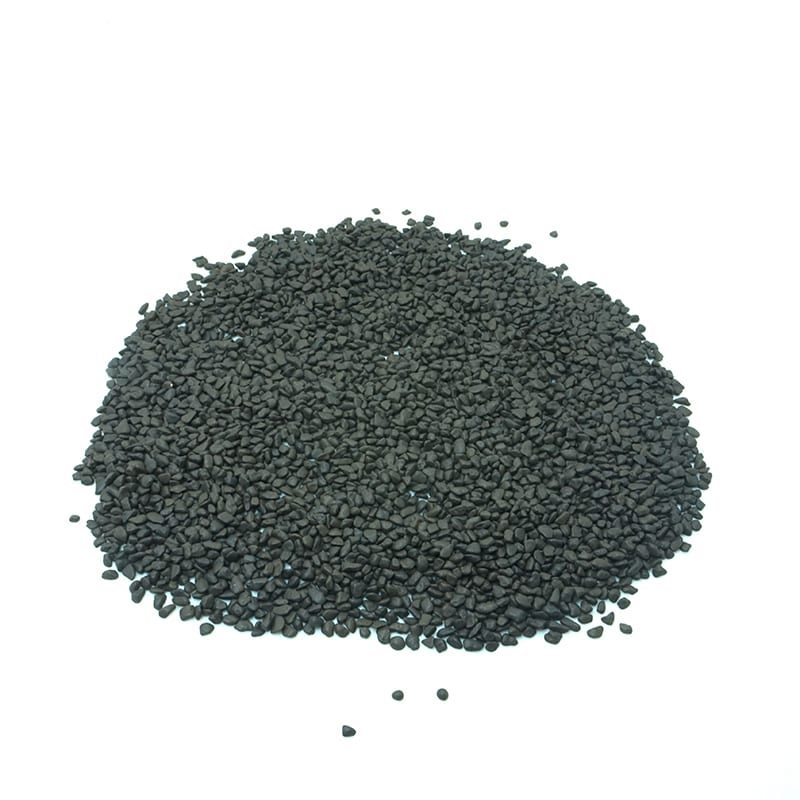
Inside a sealed OBD-LLF120 barrel, liquid water and JTJ50 (stainless brightening), JTJ60 (fine metal polishing), or HM3 (general brightening) compound must cover the media-and-part mass evenly to cushion sliding friction and suspend abraded metal fines. Too little liquid overheats the sealed slurry and dulls parts; too much liquid cushions cutting speed excessively.
Pre-Cleaning Oily Machined Parts & Managing Hydrogen Gas Venting
Heavy CNC cutting oils or dirty quench residue inside a sealed barrel turn wet slurry into dark gummy paste within minutes. Always pre-wash raw precision parts in an ultrasonic cleaner first, and avoid mixing un-neutralized acid MC8 descalers with reactive zinc or aluminum alloys inside sealed drums; always follow barrel manufacturer venting checks after reactive cycles and monitor water hardness in mass finishing stability.
Post-Barrel Rinsing, 35A/70A Spin Drying & Dry Walnut Shell Buffing
Immediately after unlatching each planetary barrel, dump the charge onto a cushioned separation sieve, rinse away spent slurry thoroughly with clean fresh water, and transfer parts straight into a 35A or 70A centrifugal dryer to prevent flash rust or mineral spots. Where optical mirror warmth is needed on non-ferrous watch hardware or bone plates, follow with a dry walnut shell or corncob (8#-80#) rotary barrel tumbler pass.
Barrel Balancing, Loading Ratios & Polyurethane Liner Maintenance
Safe, vibration-free operation of a high energy centrifugal barrel LLF120 depends on balancing opposing barrels accurately and keeping polyurethane drum seals spotless.

Balancing Opposing Barrel Weights Before High-Speed Turret Start
Spinning four planetary drums at high turret speed magnifies even small weight differences into heavy bearing vibration. Always weigh media, water, and part charges on a bench scale beside the OBD-LLF120 so opposing barrel pairs match closely in total mass before locking the safety guard.
Controlling Media-to-Part Volume Ratio & Fill Depth
Each sealed barrel performs best when loaded to its calibrated operating fill depth with a generous media-to-part volume ratio. Overloading parts starves cushioning and risks micro-bruising on sharp airfoils; under-filling the barrel wastes chamber volume and alters the cascading slide angle.
Inspecting Lid Gaskets, Locking Clamps & Polyurethane Liners
High-G wet slurry pushes hard against barrel lid O-rings and clamp bars. Wipe lid grooves clean of stray abrasive grains before every lock-up, and inspect polyurethane barrel walls regularly for gouges so sealed runs never leak or scuff parts.
| Planetary Barrel Symptom | Probable Shop-Floor Cause | Fast Corrective Fix | Preventive Operating Standard |
|---|---|---|---|
| Turret vibrates during ramp-up | Unbalanced opposing barrel weights | Re-weigh media + part + water charges | Weigh all four barrels on bench scale |
| Dull, dark film on stainless parts | Dirty slurry or oily incoming parts | Ultrasonic pre-wash + fresh JTJ50/JTJ60 |
Refresh water & compound every cycle |
| Fine edge nicks on blade tips | Over-filled part load or low media fill | Raise media-to-part volume ratio |
Lock max part count per barrel recipe |
| Slurry seeping from lid gasket | Grit trapped under lid O-ring seal | Clean lid groove; inspect/replace O-ring | Wipe sealing rims before clamping shut |
Quality Verification, Metrology & Multi-Stage Precision Workflows
Validating OBD-LLF120 output ensures aerospace, hydraulic, and medical-adjacent hardware meets strict roughness and fatigue standards cleanly.
Auditing Surface Roughness & Edge Break Under Magnification
Inspect first-article blades, valve spools, and bone screws under optical magnification for zero edge-rollover and verify surface leveling against surface finish conversion chart tolerances before authorizing multi-batch release.
Integrating Barrel Finishing Process & Isotropic Finishing Controls
Compare barrel finishing process and isotropic finishing documentation to standardize step-down media recipes across multi-stage precision cells.
Documenting Balanced Barrel Recipes for Repeatability
Record exact turret RPM, barrel fill weight, high-alumina grade, JTJ50/JTJ60 charge, and 35A/70A drying settings per part number so every operator reproduces identical mirror-satin results across shifts.
Troubleshooting Common Planetary Barrel Finishing Issues
Proactive checks keep high-energy centrifugal barrels running smoothly across demanding precision tolerances.
Resolving Slow Cut Rates on Hardened Tooling & Superalloys
If tough Inconel or hardened die inserts finish slowly in high-alumina burnishing media alone, introduce a short pre-leveling run with fast-cut ceramic media and LC10, then swap cleanly to high-alumina spheres with JTJ60 for rapid isotropic luster.
Preventing Thread-Root Lodging on Bone Screws & Valve Spools
Always size high-alumina spheres or micro-cylinders noticeably larger or smaller than pitch-to-pitch thread valleys so stones never wedge tightly between screw flanks under high G-force.
Eliminating Water Spots & Heat Tint After Unloading
Because sealed planetary runs warm the slurry slightly through friction, parts emerge warm and dry rapidly in open air—leaving mineral streaks unless rinsed immediately with clean fresh water and spun dry inside a 35A/70A dryer.
Maintaining Drive Belts, Safety Interlocks & Turret Bearings
Follow routine lubrication and drive-belt tension checks on your OBD-LLF120 turret assembly and verify lid safety interlocks weekly so multi-shift precision finishing remains safe and reliable.
Controlling Turret Speed, Cycle Staging & Thermal Rise in Sealed Drums
Inside a high energy centrifugal barrel LLF120, high-G planetary shear generates mild frictional warmth inside the four sealed drums over extended runs. Maintaining proper water fill ratio, using clean JTJ50, JTJ60, or HM3 compound chemistry, and avoiding over-long sealed cycles without fresh slurry exchange prevents compound breakdown and thermal tarnish on sensitive stainless or brass precision parts. Pre-washing oily CNC blanks in an ultrasonic cleaner keeps sealed slurries clean from start to finish.
Pairing OBD-LLF120 Planetary Runs with Dry Walnut Shell & OBD Magnetic Units
While the OBD-LLF120 delivers unmatched nick-free isotropic finishing on turbine airfoils, surgical bone screws, and hydraulic valve sleeves, luxury watch bezels and mirror brass hardware can gain extra optical warmth from a brief final dry walnut shell (8#-80#) rotary barrel tumbler pass after 35A/70A spin drying—while parts with deep blind cross-holes pair cleanly with a secondary OBD-60 magnetic pin cycle.
Enforcing Strict Four-Barrel Weight Balancing & Gasket Hygiene
Never guess barrel fill weights on a planetary turret: weigh high-alumina media, water, compound, and parts on a calibrated bench scale so opposing drums match closely. Wiping polyurethane lid grooves clean of stray grit before clamping protects O-ring seals and prevents messy high-G slurry leaks.
Auditing Metrology, Fatigue Readiness & Thread Integrity
Verify first-article aerospace blades, valve spools, and bone screws against surface finish conversion chart roughness targets and optical thread checks, confirming crisp metering edges and zero sliding-zone micro-nicks across every lot.
Planning Preventive Polyurethane Liner, Belt & Bearing Care
Inspecting polyurethane drum linings, turret drive belts, and lid safety interlocks on a fixed weekly schedule keeps your OBD-LLF120 operating smoothly at peak planetary G-force across years of high-precision finishing service.
Multi-Shift Economics, Validation & Precision Line Scaling
Investing in a high energy centrifugal barrel LLF120 (OBD-LLF120) pays off fastest on high-value precision components where conventional tumbling causes micro-nicks or takes far too long to reach isotropic finishing targets.
Quantifying Cycle Compression vs. Slow Rotary & Vibratory Tumblers
Whereas a slow rotary barrel tumbler or standard ZL bowl may require extended runs to refine tough titanium blades or hardened steel valve sleeves, planetary G-force inside an OBD-LLF120 achieves comparable surface smoothness in a fraction of the cycle time—freeing floor capacity for higher-margin precision work.
Standardizing Four-Drum Recipe Cards for Aerospace & Medical-Adjacent SKUs
Documenting exact media weight, high-alumina grade, JTJ50/JTJ60 compound volume, turret RPM, and 35A/70A drying parameters on controlled part routers guarantees repeatable lot-to-lot finish across every shift.
Integrating Settling Tanks, Bench Scales & Cushioned Unloading Sieves
Equipping the OBD-LLF120 station with a dedicated digital bench scale for four-drum balancing, cushioned nylon unloading sieves, and a clean rinse sink turns high-energy planetary finishing into a clean, ergonomic, one-operator workflow.
Scaling Precision Capacity with Modular OBD & Dryer Pairings
Combining an OBD-LLF120 planetary barrel with an OBD-60 magnetic pin polisher for internal cross-holes and a 35A spin dryer gives precision machine shops complete exterior-and-interior finishing capability inside one compact bay.
Preventing Media Attrition & Slurry Thickening in Extended Planetary Cycles
Under intense four-barrel planetary G-forces, overloaded parts or starved water charges accelerate media breakdown and turn wet slurry thick and abrasive. Keeping liquid fill balanced, using clean JTJ50/JTJ60 or HM3 chemistry, and screening worn high-alumina spheres between runs preserves crisp isotropic finishing uniformity across every lot.
Coordinating Upstream CNC Edge Prep with Downstream Planetary Smoothing
Machining shops get the fastest turnaround from an OBD-LLF120 when rough CNC toolpaths leave minimal wire burrs rather than heavy torn flanges. Pairing clean upstream machining with ultrasonic cleaner degreasing lets planetary barrels focus on precision radiusing and mirror-satin surface refinement.
Validating First-Article Thread Pitch & Metering Lands Before Batch Release
Before releasing high-value surgical bone screws, hydraulic valve spools, or turbine blades to downstream inspection, verify thread-pitch engagement and sharp metering edges under optical magnification. Documented first-article sign-off ensures zero batch scrap across multi-shift planetary production.
Controlling Barrel Temperature & Slurry Cleanliness on Extended Cycles
When running tough titanium or Inconel aerospace components for extended planetary cycles inside the OBD-LLF120, scheduling a mid-cycle slurry refresh flushes out fine abraded oxide and keeps JTJ50/JTJ60 chemistry bright and cool. Fresh compound prevents dark tarnish and preserves crisp isotropic gloss.
Coordinating Lab Validation & Multi-Stage Recipe Sign-Off
Documenting verified turret speeds, high-alumina media sizes, and 35A/70A drying recipes during initial lab qualification ensures every subsequent production batch reproduces identical surface smoothness and edge integrity.
Auditing Four-Drum Liner Wear & Spare Seal Inventory
Maintaining spare lid O-rings, polyurethane drum liners, and balanced high-alumina media stock beside your OBD-LLF120 prevents unplanned downtime during urgent aerospace or medical-adjacent production runs.
Standardizing Clean Rinse & Immediate Drying After Planetary Cycles
Transferring freshly tumbled parts directly from cushioned unloading sieves into a 35A or 70A centrifugal dryer preserves spotless isotropic luster without mineral spotting.
Consistent four-barrel balancing, clean JTJ50/JTJ60 compound dosing, and prompt 35A/70A centrifugal drying keep precision turbine blades, surgical bone screws, and hydraulic valve sleeves completely free of micro-nicks and water spots across every production shift.
SurfacePolish Planetary Platforms, Certifications & Free Sample Trials
SurfacePolish (Xiamen Jin Tai Jin Grinding Technology Co.,Ltd.) manufactures high energy centrifugal barrel LLF120 (OBD-LLF120) planetary finishers across 21 machine platforms—spanning centrifugal and rotary finishing machines, OBD-LX100B/LLB50 centrifugal discs, ZL/ZXL vibratory bowls, L1300–L1800 straight troughs, OBD-30 to OBD-100 magnetic polishers, 35A/70A dryers, and ultrasonic cleaner stations—backed by 200,000+ practical finishing solutions.
Certified Manufacturing Quality & Single-Source Media Supply
All equipment is engineered under ISO 00726Q01571R001 quality management alongside CE M.2023.206.C88121 and CE M.2023.206.C88120 certifications and 24 granted Chinese IP rights. Supplying matched OBD-LLF120 machines, high-alumina media, ceramic media, plastic media, corncob/walnut shell (8#-80#), and JTJ50/JTJ60/HM3/LC10/MC8 compounds from one factory guarantees repeatable precision.
Send Precision Blades, Screws or Valve Sleeves for Free Planetary Trials
Ship your raw CNC-machined blades, valve spools, or precision screws to our engineering lab for complimentary OBD-LLF120 planetary trials. We document exact barrel balancing, media sizing, compound dosing, and metrology results before you invest.
 +86-592-2381506


 IPv6-Netzwerk unterstützt