Walnussschalen vs. Maiskolben: So wählen Sie das richtige Poliermittel für Brillen, Schmuck und Beschläge
Leitfaden zur Auswahl von Poliermitteln für die Trockenpolitur • Walnussschalen & Maiskolben • Für Trockentrommel-, Vibrations- und Zentrifugalanlagen
Trockene organische Medien – zerkleinertWalnussschaleund BodenMaiskolbenDas Allround-Werkzeug für das Trockenschleifen und die Trockenvibrationspolitur ist das erste seiner Art. Die beiden Materialien sehen im Beutel ähnlich aus, verhalten sich in der Trommel aber sehr unterschiedlich. Die Wahl des falschen Werkzeugs führt meist zu matten Oberflächen, anhaftenden Polierrückständen oder Teilen, die zwar sauber, aber nicht glänzend sind. Dieser Leitfaden erklärt die Eigenschaften der einzelnen Poliermittel, ihre Unterschiede und wie Sie das richtige Werkzeug für Brillen, Schmuck und Präzisionsbeschläge auswählen.
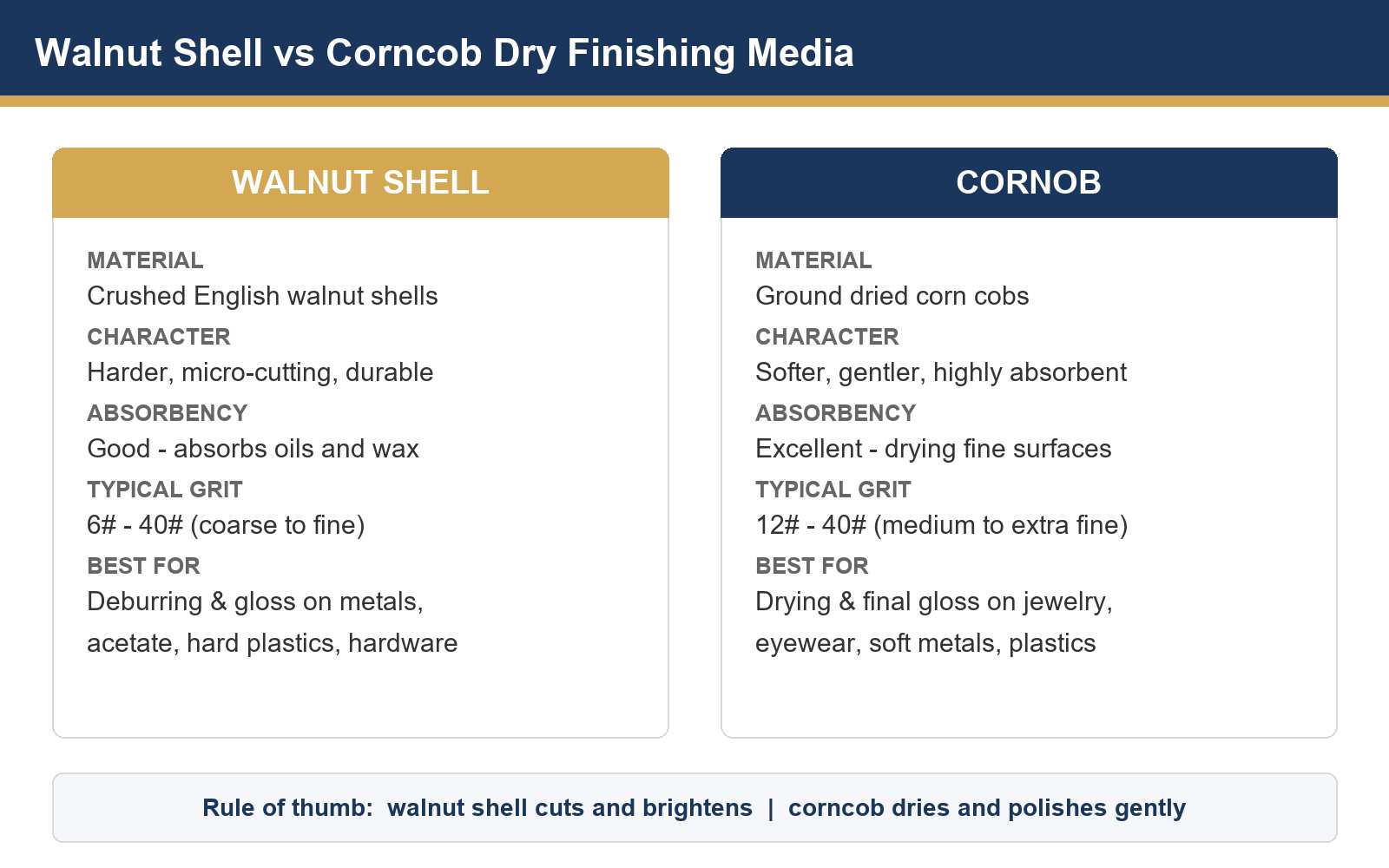
Faustregel.Walnussschalenpulver schleift und poliert – verwenden Sie es, um Spuren, leichte Oxide oder Grate zu entfernen und gleichzeitig Glanz zu erzeugen. Maiskolbenpulver trocknet und poliert sanft – verwenden Sie es, um Öle und Poliermittel aufzusaugen und empfindlichen Teilen einen weichen, streifenfreien Glanz zu verleihen.
1. Was trockene Medien tatsächlich bewirken
Bei einem Trockenverfahren wird keine Arbeit durch Wasser oder chemische Lösungen verrichtet. Das Medium selbst erfüllt drei Aufgaben gleichzeitig: EsAbrieb(Entfernen von Graten, Werkzeugspuren und leichten Anlauffarben),trägt Verbindung(Polierwachs an das Werkstück halten), und esabsorbiert(Sie saugen Öle, Fingerabdrücke und verbrauchte Schleifpaste auf, sodass die Teile sauber und trocken werden). Die Stärke des Abtrags – und die Absorptionsfähigkeit – eines Schleifmittels sind genau die Unterschiede zwischen Walnussschalen und Maiskolben.
2. Walnussschalen-Medien: Eigenschaften und optimale Verwendungsmöglichkeiten
Walnussschalen sind zerkleinerte, harte Schalen, typischerweise von Walnüssen. Sie sind auf Partikelebene deutlich härter und schärfer als Maiskolben, wodurch sie eher als leichtes Schleifmittel denn als reines Poliermittel geeignet sind.

- Leichte Schneidwirkung:Entfernt leichte Grate, Trennlinien, Anlauffarben und durch Hitzeeinwirkung entstandene Verfärbungen an Metallen und harten Kunststoffen.
- Hochglanzgebäude:Auf Messing, Aluminium, Zink und Acetat entwickelt es innerhalb von 2 bis 8 Stunden Zyklen als typischem Anfangsbereich einen hellen, gleichmäßigen Glanz.
- Langlebig und wiederverwendbar:Es behält seine Struktur länger als Maiskolben, daher eignet es sich für längere Produktionsläufe, bevor es ersetzt werden muss.
- Typische Noten:Grobe Körnungen (6#–20#) zum Reinigen und Entgraten; feinere Körnungen (24#–40#) zum Glätten und Vorpolieren.
3. Maiskolben-Medien: Eigenschaften und optimale Verwendungsmöglichkeiten
Maiskolbenmehl besteht aus dem gemahlenen Kern getrockneter Maiskolben – einem weichen, hochporösen organischen Material. Es hat eine geringe Abtragswirkung; seine Stärken liegen in der Absorptionsfähigkeit und der sanften, polierenden Wirkung.

- Sanftes Polieren:Glättet Mikrorauigkeiten und erzeugt einen sanften Glanz, ohne Kanten abzurunden oder Gewinde zu beschädigen.
- Ausgezeichnete Saugfähigkeit:Nimmt Polierwachs, Öle und Wasser auf – die Standardwahl für den abschließenden Trocknungs- und Glanzschritt nach der Nasspolitur.
- Sicher für empfindliche Körperteile:Das bevorzugte Medium für Schmuck, Uhrenkomponenten, Acetatbrillen und lackierte oder plattierte Oberflächen.
- Typische Noten:Mittel (12#–20#) zum allgemeinen Trocknen und Polieren; extrafein (30#–40#) für Arbeiten auf dem Spiegeltisch bei weichen Materialien.
4. Direkter Vergleich
| Eigentum | Walnussschale | Maiskolben |
| Schneidwirkung | Leicht bis mittel – entfernt Flecken und Anlaufen | Minimal – nur Polieren und Glätten. |
| Saugfähigkeit | Gut | Exzellent |
| Oberflächeneffekt | Hell, sauber, leicht seidenmatt bis glänzend | Weicher, tiefer, streifenfreier Glanz |
| Randzustand | Leicht weich gemacht | Konserviert |
| Medienleben | Länger – widersteht dem Abbau | Kürzer – staubig, wenn es abgenutzt ist |
| Typischer Körnungsbereich | 6# – 40# | 12# – 40# |
| Beste Anwendungen | Beschläge, Messing-/Aluminiumteile, Acetatfassungen, Entgraten + Glanz | Schmuck, Uhrenteile, Brillen – abschließender Glanz, Trocknung nach Nassbearbeitung |
5. Kopplung von Medium, Verbindung und Maschine
Beide Medien transportieren Polierpaste deutlich besser als im trockenen Zustand. Geben Sie Wachs oder trockene Poliercreme daher in kleinen, regelmäßigen Dosen hinzu, anstatt eine große Menge auf einmal. Beim Trommelpolieren ist Walnussschalenpulver bei einer Trommelfüllung von 50–60 % der übliche Ausgangspunkt für die Schleif- und Glanzphasen, während Maiskolbenpulver im abschließenden Glanzprozess hervorragende Ergebnisse liefert. Ein praktisches Beispiel mit Rezepturen für die einzelnen Arbeitsschritte finden Sie in unserer [Website/Referenz einfügen].Bedienungsanleitung für Bambustrommelmaschineund durchstöbern Sie unser gesamtes AngebotTrockene PoliermedienUndOberflächenbehandlungenBereiche.
6. Auswahl-Checkliste nach Bewerbung
- Brillengestelle aus Acetat:Walnussschalen (24#–36#) mit Polierwachs zum Entfernen von Werkzeugspuren, dann Maiskolben (30#–40#) für den finalen Glanz.
- Schmuck- und Uhrenteile:Maiskolbenpulver extra fein mit einem Hauch von Glanzmittel; grobes Walnusspulver auf zierlichen Verschlüssen und Nadeln vermeiden.
- Beschläge aus Messing/Aluminium:Walnussschalen (12#–20#) zum Entfernen von Anlaufen und Graten; anschließend Maiskolben, falls ein weicherer kosmetischer Glanz gewünscht ist.
- Gewindeteile oder Teile mit kritischen Toleranzen:Nur Maiskolben oder Walnuss in feinen Körnungen und kurzen Zyklen - Maße nach dem ersten Probelauf überprüfen.
- Trocknung nach dem Nassgleitschleifen:Maiskolben, immer – ihre Absorptionsfähigkeit ist der von Walnüssen bei der Wasser- und Emulsionsentfernung überlegen.
7. Führen Sie vor der endgültigen Entscheidung eine einfache Medientestphase durch.
Die Wahl des Schleifmittels ist letztlich empirisch. Führen Sie einen 2- bis 4-stündigen Versuch mit einer markierten Stichprobe durch: Wiegen Sie die Teile vor und nach dem Schleifen, fotografieren Sie die Oberflächen unter gleichen Lichtverhältnissen und überprüfen Sie die kritischen Maße. Ist die Oberfläche sauber, aber nicht glänzend, wechseln Sie von grobem Schleifmittel zu feinerem Walnussschleifmittel (oder fügen Sie Polierpaste hinzu). Wenn sich die Kanten abrunden oder die Maße abweichen, verwenden Sie grobes Schleifmittel oder eine feinere Körnung.Rotationstrommel-TrommelmaschinenWir arbeiten mit beiden Medienfamilien zusammen und unser Team kann Ihnen ein Ausgangsrezept für Ihr Material und Ihr Endziel empfehlen.
Sie sind sich nicht sicher, welches Medium für Ihre Teile geeignet ist?
Bitte senden Sie uns die Materialangaben, die Abmessungen, den aktuellen Oberflächenzustand und die gewünschte Oberflächenbeschaffenheit Ihres Bauteils. Unser Team für Oberflächenbearbeitung empfiehlt Ihnen anschließend die geeignete Körnung des Schleifmittels, die Polierpaste und den zu testenden Zyklus.
Kontaktieren Sie unser Finishing-TeamOffizielle Website:www.surface-polish.com | Support-E-Mail:info@surface-polish.com
 +86-592-2381506


 IPv6-Netzwerk unterstützt